Delicate Delegation

1 06 2012

It seems to me that the delegation of tasks (better known as the delegation of control) is a bit like asking a friend to cut your hair. You’re probably better off doing the job yourself, you sense things are not going to turn out perfect, but at least you can say you gave them a chance before taking back the scissors (and editing their handiwork later).

Delegation of anything can be a delicate issue. Some of us can’t handle the weight of responsibility, and so delegate in order to shirk decision-making at the earliest opportunity. Others of us simply don’t trust anyone other than ourselves to do the job well or to meet our expectations, countenancing delegation solely as a means of assigning unwanted and unimportant work to someone else.

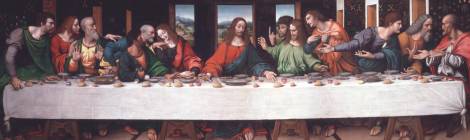
So how does God square up as a delegator? How does someone with a world of power, and vision to match, decide who to share it with? How does God get the work done? Looking at the life of Jesus, we find some interesting lessons. Here are a few:

Firstly, God invests in people quickly. Within moments, it seems, of Jesus’ taking up public ministry, he calls alongside Simon Peter and his brother Andrew, then James and his brother John (Matt. 4). From the outset, God does not intend to do his work alone.

Secondly, God takes the flack for his people’s mistakes. Nobody concerned to save face would choose disciples like Jesus’ twelve. Time and again they misunderstand him, they misinterpret him and disobey him, with the consequence that others misunderstand and misinterpret him. So no, God would not get a gold star for his choice of employees, but he manages the ones he has with exceptional skill. Jesus is patient with his disciples, he takes his time with them, he journeys with them, he repeats and explains things for them, he invests time and prayer in them, and ultimately he stands by them. Nobody gets dropped but everybody is given freedom to leave, however painful to himself and his mission (Matt. 26:31).

Thirdly, God’s ‘whys’ are more important than his ‘whos.’ When it comes to choosing who to pass the baton to, Jesus chooses prayerfully (Luke 6) and then merely adequately. I don’t think Jesus chose disciples from among fishermen, zealots and tax collectors because they shone out as skilled learners and leaders. I think he chose them for a different reason entirely: to show that it is only by God’s own qualities, his love, grace and power shared, that anyone can fulfil God’s intentions. God’s associates are not the world’s boldest and best, but ordinary people like you and me, people who may not have it all at the outset but who can learn as they follow, developing skills and traits which mirror God’s own, with everlasting impact.

Having been a manager myself in days gone by, I appreciate that these things may not translate easily to the world of business (or hairdressing!), geared as we are to hold on to control more easily than we relinquish it. But I do wonder what life would look like if we had a go at doing things Jesus’ way. We might end up looking like Ziggy Stardust, but perhaps we wouldn’t need the scissors back.

Madi Simpson


Are You Connected?

2 05 2012

There’s no doubting the power of social networks. Recently I bought something on Amazon, and was surprised by the website’s invitation to me to share news of my purchase with my Facebook friends and Twitter followers. Quite why I’d want anyone to know that I’d just parted with £12 for a bamboo steamer, or why anyone would be interested, I’m not sure. I don’t think Amazon cares either. As with any other website asking the same or a similar question—‘Did you like this site?’, ‘Want to tell your friends?’…—they just want to cash in on our virtual communities because, apparently, online is where community’s at.

Is it? Are our online relationships really more valuable than our real world ones? Is real community even possible on the internet? I have lots of virtual friends, but taking into account the nature of our interactions—fleeting, two dimensional—I’m not sure that really counts for much.

Making friends face to face can be awkward. I remember Fresher’s Week at university, the first week of term, where new students are inducted into life on and off campus. I flitted from group to group, not wanting to cling to one too fast in case something better came along. I wanted to make friends, people I could share at least three years of my life with. Sometimes connections came quickly, but more often than not they took time: eating out together, going for coffee, sports training, nights out. I must have met a hundred people or more that first week, yet I can count the close friends I made at university on two hands; not much good if you want to sell steamers, but invaluable relationships to me personally.

Online communities are different. They provide an opportunity to connect with people without any kind of getting-to-know-you process. The faceless, wireless nature of them makes this easy. Online, people tend to organise themselves around shared interests. You simply log into a forum as yourself, or someone else, and get chatting. You can share thoughts, opinions, pictures with practically anybody on the web. You can organise protests or a flashmob or start riots through online media. It’s quicker and easier than forging community with physical people in real space, but give me an awkward first conversation over coffee any day.

A common criticism of monastic communities is that they’re disconnected from the real world. Monks and nuns are people who eat together, pray together, and share life together in a tangible, simple and striking way. Often growing their own food, working with their hands, interacting with local communities, they enjoy fewer friends, fewer forums, and possibly a richer experience of everything that God has made.

Who’s disconnected?


What Makes a Movie Christian?

27 04 2012

What makes a piece of art or music or cinematography ‘Christian’? Sometimes the ‘Christian’ label is slapped onto all sorts of things, from cookies to car insurance, simply because the thing in question was made or sold by a professing Christian. Does Christian involvement in the production of a thing or performance of an action, make that thing/action Christian? What if the same thing/action was produced by an atheist? Is there such a thing as a Christian cookie? What makes the contents Christian? What makes a film ‘Christian’?

Film is a great divider when it comes to ‘Christian’ labelling. Some view the medium itself as inherently bad. Some point to pornographic or violent content in a film as evidence that the film in question is bad and therefore ‘unChristian.’ Some films are called ‘Christian’ because they are made by Christians, others because they contain clear biblical themes. What sort of content in a film truly qualifies it to be called Christian?

I am squeamish when it comes to violence on TV. I don’t like watching it, I don’t like remembering it, and I feel equally uncomfortable watching sexually intimate scenes in films. Nonetheless, I can’t help reflecting on the fact that all the things moralists (often Christians!) typically profess to hate in film also feature prominently in the Bible: violence and violent death, incest, adultery, suicide, heterosexual rape and the threat of homosexual rape, unresolved angst… In short, pretty much every kind of immoral, compromising and complex human behaviour out there. True, the Bible contains a strong and compelling theme of redemption, but like films which are often described as ‘gritty’ or ‘real’, Scripture speaks to the human condition not by outlining esoteric avenues for escape (not every story in the Bible ends on a spiritual ‘high’) but by going into the details of people’s real lives: rejoicing over births and weddings, describing real fear of real enemies, lamenting suffering and death, celebrating goodness and beauty, delighting in and being frustrated by God, sometimes in response to a God who has revealed himself, sometimes in response to a God who seems absent. There is a great deal of irresolution on the small scale in the Bible, if not the big. Short stories of injustice and despair are offset by a much bigger story, the central story, of love and redemption.

It would make for grim, gritty, ‘adult’ viewing if the biblical story of David was transferred to the silver screen. Does that make it any the less Christian? Maybe it’s not necessary for a film to go by the title “The Life of Christ” or to have a Shawshank Redemption finale in order to qualify as ‘Christian.’ Personally, I wonder not that the story of humanity is so depraved, but that for every historical incident of evil, there is a historical story of equal and greater redemption.

Madi Simpson


Why Wait?

28 03 2012

One Sunday I was waiting for the bus to get to church, when I overheard two men talking at the bus stop:
Man 1: “Which bus are we waiting for?”
Man 2: “The 33.”
Man 1: “33… That’s the number of lashes Jesus had.”
Me (in my head): ‘Yes, and that’s what waiting for this bus can feel like!’

Patience is a virtue, or so we’re told, but who among us is so virtuous? Britain used to take pride in its patient civility: deference to others (‘you first,’ ‘no you first’, ‘no you!’), pleases and thank yous, orderly bus queues… But these days nobody queues for the bus and it seems like nobody knows how to walk down the street without racing. Next time you step out of the house, try ambling slowly towards your destination. It’s extremely hard to do! People used to sit down and write letters thoughtfully and patiently by hand. Now we text, tweet and email dozens of messages every hour. There’s no doubt that speed can be beneficial—I’m glad I can reach my mother in the north of England within hours by train rather than days by horse and coach! But have we forgotten the benefits of waiting?

In Western culture, it is easy to want quick fixes and instant results (and the bus to arrive on time!), but Jesus knew how to wait. He didn’t rush around, even though his work was of the utmost importance. His was a natural rhythm of life. He had things to do but regularly took time away from them in order to be alone and pray. He also shunned the quickest means of getting around. Aside from his journeys by donkey to Jerusalem, and his journeys by boat across lakes, Jesus travelled on foot. He deliberately went slowly, and as many things as needed to happen happened along this slow way.

The Bible is full of references to waiting and the benefits of waiting. Far from raising our stress levels, and sapping our energy, we are told that ‘those who wait for the Lord shall renew their strength, they shall mount up with wings like eagles, they shall run and not be weary, they shall walk and not faint’ (Isaiah 40:31, NRSV). If we’re to believe the prophet Isaiah, waiting for God and waiting for customer service to call you back are two very different things. A significant factor here, of course, lies in the Person being waited for, but it’s not the only factor. The difference is in the nature of the waiting itself. Waiting for God recharges the batteries, and breathes life into weary limbs. In other words, it’s good for both body and soul. I think we all know the impact of waiting for customer service, or the bus. Perhaps it’s time to try waiting on God while we wait on these other things as well…

Madi Simpson


More wine, more glory

24 02 2012

The story of the wedding at Cana in John 2, the account of Jesus turning water into wine, is one of the best known episodes in the New Testament, if not the whole Bible. The author, John, tells us that this was the first miraculous sign by which God revealed his glory (v. 11). Ever thought about what it means that the first sign God gives to reveal his glory, the substance of his character, is the production of alcohol?

Let’s set the scene. In the story, Mary, Jesus and his disciples are at a wedding. Some way through the celebrations, Mary alerts Jesus to the fact that the hosts have run out of wine, to which Jesus replies, “Woman, why do you involve me?” (v.4). I would love to know with what sort of tone Jesus said this, it seems like such a curious thing for him to say! Was he absorbed in a fascinating conversation that he didn’t want to wrench himself away from? Was he just generally tired of his mother’s interference?? I’m not sure, and we’ll never be sure, because his question is not answered. We don’t know why Mary involves Jesus here. She ignores his question, giving instructions to the servants simply to do whatever he tells them. They obey, filling some bath sized jars with water, which Jesus turns into fine wine.

How can it be that John associates this act with the revelation of God’s glory? I mean, seriously?? There’s a wedding. The party is in full swing, probably has been for days, and what started out as a copious amount of alcohol turns out not to be enough. The pressure is on the hosts to keep their guests fed and watered. Why should God help out?

Besides, by the time Mary intervenes, it’s quite likely that Jesus is surrounded by people who are drunk or heading that way. As the master of the banquet says to the bridegroom in verse 10, ‘Everyone brings out the choice wine first and then the cheaper wine after the guests have had too much to drink…’ The presenting problem in John 2 is that both the good wine and the cheaper wine have been consumed. It’s all gone. It’s in this context that Jesus says, ‘Okay, you’ve run out of booze. Why do you involve me?’

We don’t know why Mary thought her son should be involved in this domestic crisis. John merely tells us that this spectacular deed – turning water into wine – is the first sign through which Jesus, God in the flesh, revealed his glory. Basically, John is telling us that the glory of holy God is revealed first and foremost in an act of extraordinary, controversial and extravagant blessing, something designed not to put Israel on the map or tighten up the moral code; something designed to keep the party going, or perhaps to get the party truly started.

The wedding at Cana is not about taking care not to overdo it (that’s for another time and place). And it’s not a story to tell if you want people to believe that the emphasis in Christianity is on sin.

According to John, God’s first sign to the world, his first attempt to show people what he’s really like, is to give them more of something they really enjoy, more wine and more of the best, more goodness, more fun, more life, more reasons to celebrate. He gives them more when they thought they’d had enough. Not mindless excess, but the overflowing abundance of life.

Why did Mary involve God? We don’t know. But God got involved at her request. The wedding at Cana shows us not only that God isn’t afraid to associate his glory with something earthy, like wine, but that the divine Creator submits himself to be moved by his creatures. Jesus told Mary that his time had not yet come (v. 4) yet at her prompting, he acts. Wine for them, glory for him. In some mysterious way, God’s heavenly glory is intricately connected with good things on earth. Next time you order a bottle for friends, remember that.

Madi Simpson


An Insult to Aspire to

18 01 2012

When was the last time someone threw an insult at you? Was it deserved? Not a possibility one would wish to encourage! How about putting the shoe on the other foot: have you ever insulted someone else, deliberately or otherwise?

I’m sure that most of us try to steer clear of insulting others, and hopefully also of earning insults for ourselves. However, one doesn’t have to look too far to see that some people seem driven towards confrontation. My skin creeps when I see demonstrators at the Oscars waving placards that read ‘God hates fags’ or ‘You’re going to Hell.’ These statements aren’t just insulting, the first is untrue, the second uncertain. They’re the kinds of words practically guaranteed to start arguments. And they’re the kinds of words practically guaranteed to incur a whole slew of inventive and destructive combinations of words by way of response. Is this kind of communication ‘Christian’?

Scanning the Bible, I find no ethical grounds whatsoever for the verbal abuse of others, though there are certainly places where people were sharp with their words. The prophet Elijah used sarcasm to taunt the prophets of Baal (1 Kings 18:27) and Jesus almost certainly offended two groups of religious leaders by describing them collectively as a “brood of vipers” (Matt. 3:7). Elijah was falsely labelled a ‘troubler of Israel’ (1 Kings 18:17) but I am most interested in the sorts of insults thrown at Jesus. What did people who didn’t like him say about him?

There is at least one insult Jesus received which he actually earned, prefaced though it is by lies. It is this: “friend of sinners.” In Luke 7:34, Jesus himself reports some of the insults in circulation concerning him: ‘The Son of Man came eating and drinking, and you say, ‘Here is a glutton and a drunkard, a friend of tax collectors and sinners.’ Jesus was not a glutton or a drunkard but he was a friend of tax collectors and sinners.

I don’t know about you, but that’s an insult to aspire to. To be blameless with regard to things that harm others and guilty with regard to things that bless is a rule to live your life by. If it were true for all of us, the world would be a different place.

Madi Simpson


Mother Mary

16 12 2011

When I was pregnant with my first child, I was living in Vancouver and managed somehow to get myself around that big city on a bicycle until I reached 36 weeks’ gestation, or four weeks before my due date.  It wasn’t comfortable, it certainly wasn’t pretty, but recalling it gets me thinking about Mary, Mary the mother of Jesus.

Christmas is coming.  It’s just a week away.  Most of us know the routine by now:  a party or two, buying gifts, sending cards…  If you’re anything like me it’ll all feel like a mad rush until Boxing Day.  If, however, you have a little time to contemplate the first Christmas, the time of Christ’s birth, then this Christmas I encourage you to think about Mary, Mary the mother.

I can’t imagine that riding a donkey when heavily pregnant is much more comfortable than riding a bike, yet Mary had to travel some distance to reach Bethlehem with Joseph, her betrothed, at full term, in order to take part in a census.  While most mothers-to-be are busy ‘nesting’ in the weeks before their child’s birth, getting things ready, practising their breathing, resting their swollen ankles and trying not to go out too much, Mary had to contend with travel, crowds and congestion, with the prospect of a safe place to deliver her child very much uncertain.  Wherever it was she called home was far behind her as she traveled to Bethlehem, and the census brought in every other woman, man and child who originated from the region, which of course put tremendous pressure on the town in terms of accommodation and food.

We are told that when Mary gave birth she placed Jesus in a manger, a feeding trough for livestock, because there was no guest room available for them.  What we are not told is whether the feeding trough was indoors or out, or how many nights they were without a room.  We can’t even presume that they were fortunate enough to have privacy for the child’s birth.  Given that Bethlehem was bustling with people trying to register for the census, it’s unlikely that Mary and Joseph were alone in being unable to find a room.  Yet this is the place and these are the circumstances into which Jesus, Mary’s child, was born.

What does this tell us about Mary?  What does this tell us about Jesus?  And if Jesus is God in the flesh, what does this tell us about God?

The nativity story is, of course, just the beginning.  Luke 3:23 tells us that it was thirty years before Jesus began his ministry.  Thirty years of growing up.  Thirty years under his mother’s eye.

Christmas is a good time to reflect on all sorts of things.  This Christmas I intend to give Mary more thought.  That God subjected himself to be born is something.  That God subjected himself to be parented is another.  But that a teenage girl would subject herself to give birth to and parent him is ponderous indeed.

Madi Simpson


When the Living’s Uneasy

18 11 2011

A friend of mine, married with two children, once confessed that he felt a bit guilty about buying a three bedroom house in a leafy, desirable London suburb. It wasn’t that he felt it was the wrong place. On the contrary, it was exactly the right place. Almost too right; a more comfortable, more suitable and more desirable dwelling than the majority of people in the world could ever afford or even imagine calling ‘home.’ My friend had previously worked in Africa and come face to face with serious impoverishment. How now could he justify his well paid job and comfortable lifestyle? What was he supposed to think about these things? And how was he to escape his sense of unease?

There’s a fine line between living well and living rightly. The problem is not that wealth doesn’t satisfy, the problem is that wealth satisfies way too much. It fulfils so many human longings—security, comfort, influence, choice, identity… it seems to make everything ‘alright’ but it can blind us to the fact that hardship is the norm for most of the world’s inhabitants. Too much comfort and security can push us away from those who have the opposite, from those who have less or nothing, and who live in fear as a result of material lack.

A parallel problem is that Jesus chose to identify himself with the poor. This means that, for Christians at least, the extent to which we remove ourselves from the poor is, in some sense, the extent to which we remove ourselves from Christ, from God.

My friend was concerned about all these things. Some kinds of tension are  incompatible with Christian spirituality, but some tensions, I believe, are entirely appropriate. It’s not a bad thing to worry that one’s house is too big or one’s personal expenditure too large. Perhaps they are! And perhaps they can be used differently. Uneasiness on its own does nobody any good. But if unease becomes the seat of fresh vision, and if that vision effects positive change, then there is a place for disquiet in the Christian life.

Madi Simpson


The X-Factor: Don’t have it, don’t need it

21 10 2011

Have you got the X-Factor?  Plenty of people believe they do, lining up in their thousands to audition, but only one can win. Sony Records won’t be disappointed to hear that I’m staying home. I don’t have the X-Factor. I barely have confidence to hum on the tube, never mind sing live to an audience of millions. “You’ve got to really really want this” say the judges to the musical hopefuls looking like rabbits in headlights on stage. Want what?, I want to ask.  Fame?   Money?  To make music?…  If it was all about the music, there’d be buskers on every street corner.  More often it seems to appear that the thing these hopefuls most crave is recognition and approval on a grand scale.  Everything hangs on this competition.

I’d love to tell them something different.  But what?  Christian ideals such as selflessness, humility, putting others first, may not seem like an appealing alternative to global recognition and a recording contract.  But there’s more to Christianity than sackcloth and ashes.  Each one of us may not be born to perform, but, being made in the image of a creative God, we are certainly born to create, and music is one of the most obviously creative things to do.

Do the thing that gives you life and joy, I might say.  But what about fame, recognition, adulation?  Surprisingly, Christianity offers these too, on an even larger scale but on completely different terms.  Want to be someone?  God knew you before you were born (Ps. 139:16).  Want to feel special?  You are ‘fearfully and wonderfully made’ (Ps. 139:14).  Want to be adored?  God’s love for you is insurmountable and unconditional.

Quite simply, there is no competition for God’s love.  To win ‘X-Factor,’ you earn praise and stand alone, but God’s love is completely unearned and is lavished on losers and winners alike.  The highest love on the grandest scale is available to all but only we can decide if it’s what we really want.

Madi Simpson


Rules of Life

23 09 2011

Usain Bolt was recently disqualified from the Men’s 100m final at the World Athletics Championships in South Korea. His crime? One false start. Previously, athletes had been allowed a single false start, with disqualification following a second, but a recent change in the rules denied the world’s fastest man a second attempt.

Was that right? Was it fair? I’m sure athletics committees round the world are puzzling over these questions. But it’s useful for us to puzzle this over too: what is the point of having rules and what is the point of playing by them?

I’ve often heard it said of the Bible, “It’s just a book of rules,” and indeed the Bible does contain rules. A cursory glance at the Pentateuch—the first five books in the Bible—reveals all kinds of rules and regulations ranging from the obvious (e.g. “You shall not murder,” Deut. 5:17) to the obscure (e.g. “Do not cook a young goat in its mother’s milk,” Deut. 14:21b). What are they there for?

Many of these rules are spiritual disciplines and ethical instructions which, if observed, would mark Israel out as God’s people among neighbouring nations, some of whom engaged in profoundly malevolent religious practices. But there’s another purpose to biblical rules and regulations, expounded more fully in the New Testament: the rules promote life.

Even athletics rules exist not to constrain the athletes or make life tough for them, but to help them race well and to the best of their ability.

That said, rules can be used and abused in a different way. At secondary school I learned to play the clarinet and classical guitar. Year in, year out, I practised scales, arpeggios, learned pieces for music exams, and performed in school concerts. Yet in fourteen years (gulp) since leaving high school, I’ve barely touched either instrument. The reason? Simple: year in, year out, I practised scales, arpeggios, and learned music for exams but never learned to love the music for the music itself. It was all about ‘getting it right,’ playing by the rules and playing perfectly. Surely music is about more than that?

Lots of people in Jesus’ day got into confusion about rules. They either broke them in rebellion against a God they perceived to be a harsh taskmaster, or gave up trying to keep them, perceiving that they were too far gone for God to care, or they lived by the rules to the letter but without love in their hearts. Jesus encounters people from each of these camps, breaks a number of ‘rules,’ and teaches us all a valuable lesson: that God’s rules are made for the flourishing of people, not people for the upkeep of God’s rules (cf. Mark 2:27).

Some years after I left secondary school, I picked up my guitar and started to play a piece that I’d struggled to play at school. I had found it technically difficult and my palms used to sweat when playing under pressure (which felt like most of the time), making it all but impossible. Yet with no ‘taskmaster’ present to rebuke me, no examiner to tell me my playing was substandard, and with no other motive to play than to enjoy the music, my fingers got round the notes with ease. I found I could play by the rules but not for the rules and it felt marvellous.

Madi Simpson


Follow

Get every new post delivered to your Inbox.

Join 635 other followers